
Martha Isabella Achan is a graduate of the Makerere School of Law, holding a postgraduate diploma in legal practice. She was called to the Bar in 2009. Martha also graduated from the University of Leicester (UK) in 2010 with an LLM in Employment Law. Additionally, in 2022, she completed a Master’s in International Public Health at Liverpool John Moores University (UK).
Martha is a specialist in legal reforms in accordance with the norms and practices in Uganda. In 2019, Martha joined the health sector with a focused role to ensure the legal reform of the Public Health Act Cap 281, the Animal Diseases Act Cap 38 and the food safety laws, as highlighted in the National Action Plan for Health Security (NAPHS). She holds the portfolio of legal advisor of the Acceleration Team of the NAPHS under the Ministry of Health.
In order to fulfil Uganda’s obligation to domesticate the International Health Regulations 2005, Martha worked with the Ministry of Health and the Ministry of Justice & Constitutional Affairs to successfully conclude the Public Health (Amendment) Act, 2023. Currently, she is also supporting the Ministry of Agriculture, Animal Industry & Fisheries to progress the amendment of the Animal Diseases Act and to commence on a new law called the National Agricultural Inputs and Food Authority Bill, 2023. Similarly, Martha is working with the NAPHS Acceleration Team to formulate the national One Health policy; the process is now at the regulatory impact assessment stage.
Currently, Martha represents the Ministry of Health, Government of Uganda, in the World Health Organization negotiations to amend the International Health Regulations (2005), and to draft the Pandemic Treaty. Martha provides legal counsel to the Africa Group plus Egypt, in the negotiations. The WHO International Health Regulations (2005) have been successfully amended, with Uganda taking a lead negotiator role in some Articles.
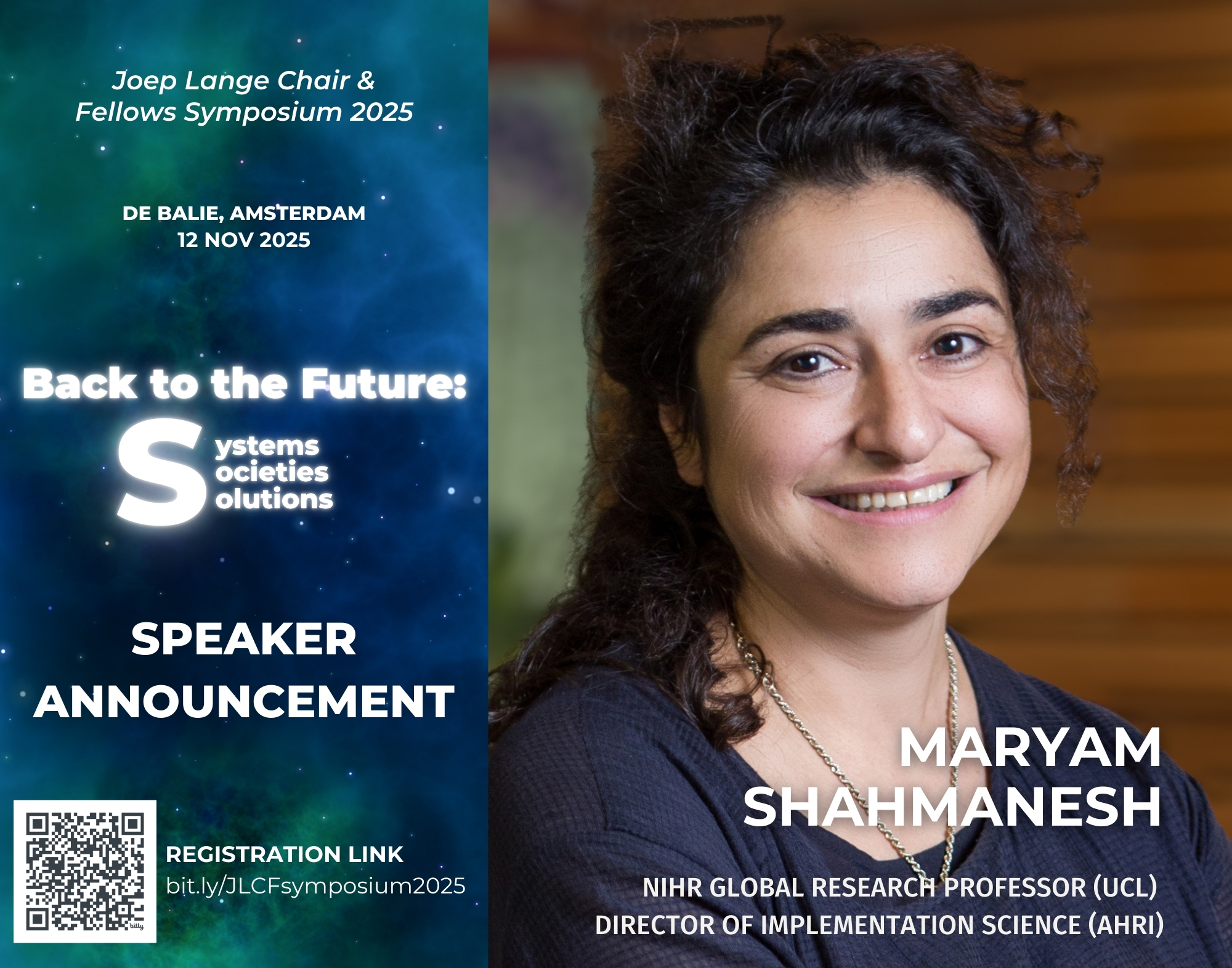
Dr Maryam Shahmanesh is a physician-scientist, a NIHR Global Research Professor at University College London, and Director of Implementation Science at the Africa Health Research Institute, South Africa.
She leads interdisciplinary research to co-create and evaluate biosocial interventions for adolescents and young adults. She has conducted trials of decentralised models of delivering differentiated HIV prevention and Pre-Exposure Prophylaxis (PrEP), e.g., the use of social networks and HIV self-tests, peer navigator-led tailored biosocial care, and integrated HIV and sexual health services.
She currently leads LAPIS, a cluster RCT of real-world implementation of the choice of oral PrEP/ Post Exposure Prophylaxis (PEP) in the pocket, or long-acting injectable PrEP through mobile sexual health services supported by peer navigators. She serves on a range of national and international guideline and funding committees and actively engages in mentoring the next generation of South African scientists.
Dr Brooke Nichols is an infectious disease mathematical modeller and health economist specializing in transmission dynamics, implementation modeling, and optimal resource allocation for pathogens including HIV, tuberculosis, SARS-CoV-2, and other pathogens of pandemic potential. Her work seeks to minimize the health and economic impact of infectious diseases through innovative quantitative approaches.
Dr. Nichols leads a multi-continental research team of quantitative scientists and modellers who integrate insights from clinical science, epidemiology, health economics, and mathematical modeling to develop actionable, evidence-based strategies. Her team advances novel quantitative methods and adapts existing frameworks to design cost-effective, scalable interventions aimed at reducing transmission, morbidity, and mortality. Their work has significantly influenced national and global health policies across critical public health domains. This includes contributing to evidence to normative guidance on HIV prevention and care (e.g., optimizing pre-exposure prophylaxis, scaling up HIV self-testing, improving viral load monitoring, and enhancing differentiated service delivery models), informing global strategies for the optimal use of diagnostics during the SARS-CoV-2 pandemic (spanning mitigation, treatment, and surveillance), and guiding the development of World Health Organization’s Target Product Profiles (TPPs) for innovative diagnostics.
Dr Rogier Sanders is a professor of virology, specializing in designing novel antiviral vaccines and antibodies. He studied medical biology at the University of Amsterdam and the Rockefeller University in New York. In 2004, he obtained his PhD (cum laude) from the University of Amsterdam. Dr Sanders also holds an affiliate faculty position at Weill Medical College of Cornell University in New York where he spends part of his time.
His research focuses on viral glycoprotein vaccines, in particular those based on native-like trimers. Several of Dr Sanders’ HIV-1 envelope trimers are now in phase I clinical trials as candidate vaccines and his proline stabilization of HIV-1 envelope trimers has inspired many COVID-19 vaccines currently in use. He also co-isolated one of the most potent and broad HIV-1 neutralizing antibodies, PGDM1400, which is also currently in phase I and II clinical trials.
Dr Sanders has received several prestigious grants such as the Veni, Vidi and Vici grants from the Netherlands Organization for Scientific Research (NWO) and a Starting Investigator grant from the European Research Council (ERC). He leads and/or participates in various research consortia funded by the EU, NIH/NIAID and the Gates Foundation. Dr Sanders has (co-)authored more than 250 articles in scientific journals, including journals such as Nature, Science, and Cell and his papers have been cited over 15,000 times. In 2011, he received the Dutch Prize for Biochemistry and Molecular Biology. In a top-10 list of “hottest authors” in HIV/AIDS research 2013-2015, compiled by Thomson Reuters, Dr Sanders shared the top position. In 2023 he received an honorary doctorate from the University of Southampton, UK.
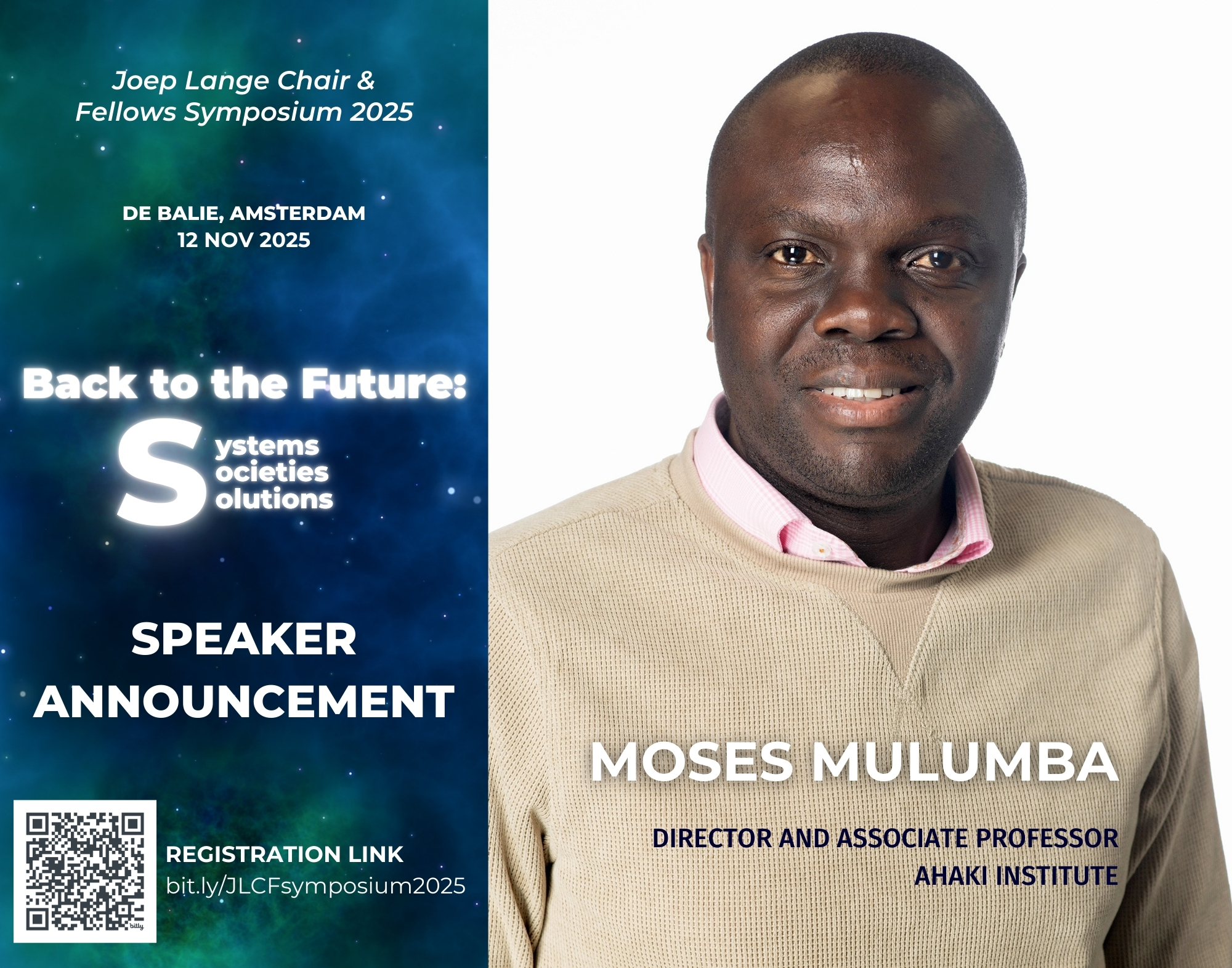
How can the world find its way back to a sustainable and just future for global health?
Four leading thinkers in global health and development will reflect on this question at the annual Joep Lange Chair & Fellows symposium on 12 November in Amsterdam from 13:30-17:00 CET. The theme for 2025 is “Back to the Future: Systems, Societies, Solutions”.
With this topic, the organizers wish to explore how the global health field might reclaim and reimagine progress when many hard-won gains risk being lost. The discussion will be framed across three interconnected dimensions:
- Systems: governance, regulation, and financing for health
- Societies: ethics, equity, and citizen agency
- Solutions: technologies and scientific breakthroughs
Register to join us at this thought-provoking event (free of charge).